Main Introduction
Artificial Turf Infill Replenishment
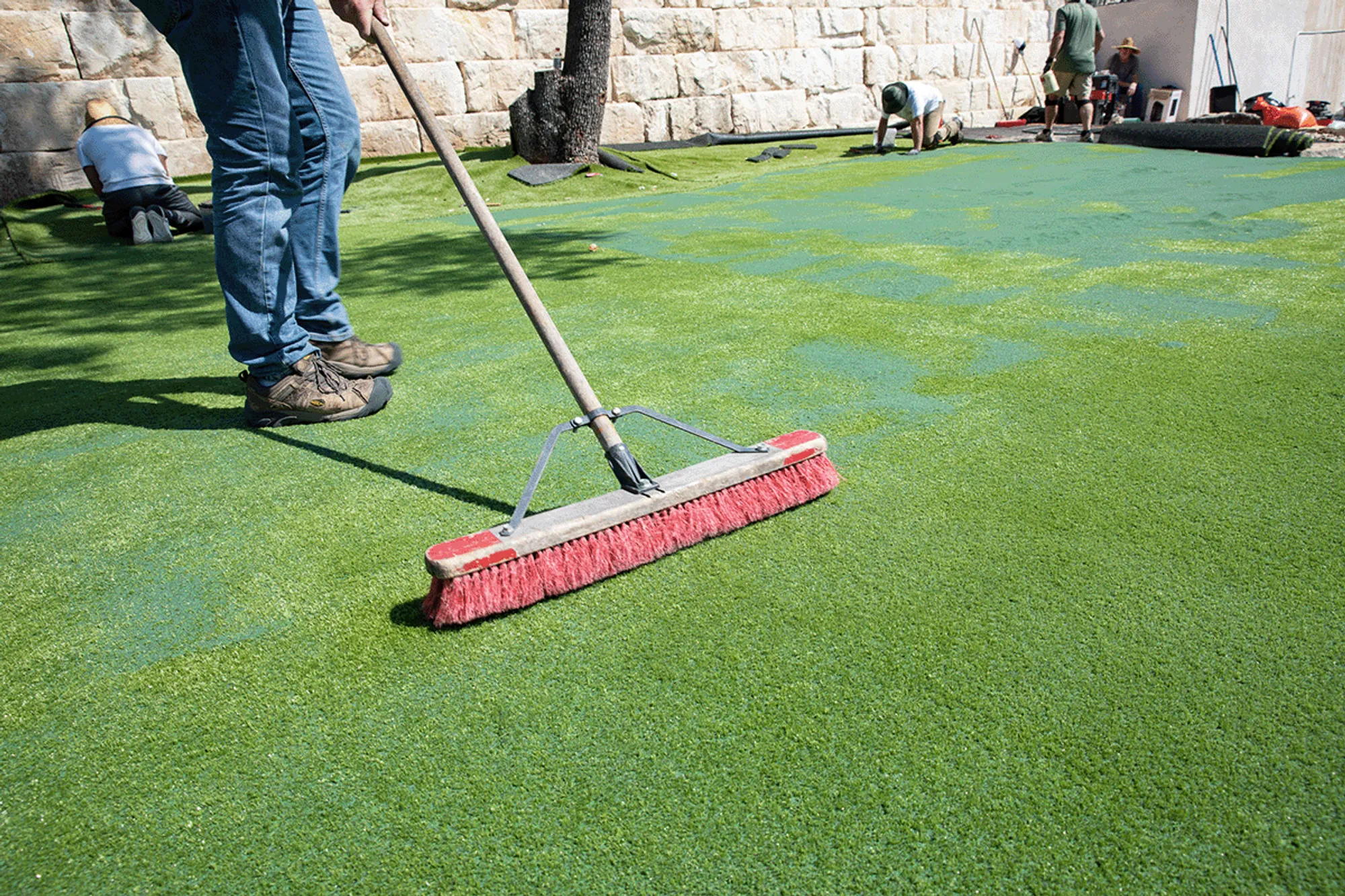
Artificial Turf Infill Replenishment in the Baytown area addresses one of the most common performance degradation scenarios in coastal climate turf installations: the gradual migration and depletion of infill from high-traffic zones and drainage exit points that causes blade flattening, reduced surface cushion, and inconsistent performance across the installation footprint. In Baytown's Southeast Texas coastal environment, this process is accelerated by the heavy-rainfall events that characterize the area's wet season and the consistent surface drainage that pushes infill from elevated zones toward drainage exits.
The Trinity Bay and Galveston Bay corridor's rainfall patterns are among the most intense in Texas. When a two-inch-per-hour rain event moves across a Baytown waterfront property, the drainage through a turf surface pushes infill material directionally — downslope toward drainage exits, away from elevated central zones, and out of high-wear corridors where foot traffic already accelerates infill compression. Over two to three years, this process creates measurable infill density variation across even a well-installed surface. The high-wear zones show blade flattening and reduced cushion; the drainage exit areas show compacted infill; the lower-traffic zones often show near-original infill depth.
Turf Installation of Baytown approaches infill replenishment with a diagnostic-first process that maps infill density variation before adding any material. Adding new infill to a surface without understanding the existing distribution pattern can create over-density in already-adequate zones while still leaving depleted areas underperforming. We probe and document infill density across the installation footprint before developing a replenishment and redistribution scope.
The infill products selected for Baytown area replenishment account for coastal climate conditions — the humidity levels that affect how some infill materials behave, the salt-air exposure that can affect infill chemistry in bay-adjacent installations, and the drainage volumes that characterize Southeast Texas's heavy-rain seasons. We do not apply standard inland infill products to coastal installations without verifying they are appropriate for the specific site conditions.
For pet area replenishment, we assess antimicrobial infill performance separately from structural infill condition. Baytown's high humidity creates conditions where antimicrobial infill performance can degrade faster than in drier climates — and where delayed replenishment creates odor management problems that are difficult to address after the fact. Pet area replenishment assessments include antimicrobial infill depth, performance, and replacement recommendations.
Property owners receive a written replenishment assessment after diagnostic mapping, including infill density findings by zone, replenishment material recommendations, and a maintenance schedule recommendation for future replenishment intervals based on the specific use load and drainage behavior of the installation.